Welcome to the Lion’s City!

Written by Aaron Barnes, M.B.A., BSBA Marketing
Introduction & Abstract:
The name, Singapore, is an Anglicization of the Malay word, singapura, which translates to “lion’s fortress or city.” In Hindu-Buddhist culture, lions are seen as a symbol for protection and strength. Singapore is the only fully sovereign city-state in the world and is located at the tip of the Malay Peninsula. During the Medieval period and age of exploration in the 16th to 18th centuries, the area was a focal point for the spice trade by Dynastical China, Japan, the Dutch East India Company and the British East India Company. The Malay Peninsula was a vital pit-stop for traders from Europe to Asia. The region has been populated by fishermen and traders for millennia; however, the modern city of Singapore was founded in 1867 as a trading post for the British Empire. In 1959 Singapore gained its independence from the British and in 1965 Singapore became a sovereign city-state. Due to a lack of natural resources and a hinterland, Singapore focused heavily on external trade and international commerce. Today, Singapore is known as one of the Four Asian Tigers: South Korea, Taiwan, Hong Kong, and Singapore. These are economies characterized by a growth rate of 7% per annum and by rapid industrialization from the 1970’s to the 1990’s. Singapore is perfectly located within the Bamboo Network in the South Asian Pacific market. The metropolis has consistently ranked among the United Nations as one of the most developed nations on earth with some of the highest standards of living. More relevantly, the World Bank Group as well as the World Economic Forum have ranked Singapore as the world’s most competitive, the world’s freest economy, and the easiest place to do business for the past decade.
Singapore has a very attractive tax system that is business friendly and framed to attract international firms. There are a multitude of codes that allow foreign firms to maintain independent control of their subsidiaries and avoid double taxation. Its marginal corporate tax rate is already one of the lowest in the world, and the tax exemptions available to businesses create an even more favorable effective tax rate. Also, Singapore belongs to a plethora of trade deals that create a robust network to take advantage of.
Singapore provides a sensible legal code to operate within and corruption is virtually nonexistent in its market. The city-state is consistently ranked as one of the best places in the world to live in and the labor market or access to human capital is advantageous to a company seeking to internationalize. This tropical and multicultural location is steeped in tradition, history and culture; therefore, provides year-round entertainment opportunities for those who wish to live on the Malay Peninsula.
The metrics and attributes that Singapore provides businesses creates a fantastic climate to make a business profitable and reach global markets easier than they would in another country. Click this link to see an animated map from 2012 of shipping routes around the globe and note the traffic and types of cargo that go through Singapore’s shipping lanes. https://www.vox.com/2016/4/25/11503152/shipping-routes-map
Value Proposition:
Tax Codes & Access to financial capital:
It only takes one day to submit the proper paperwork to the government to become a registered company in Singapore and can be done online. The Singaporean government and Ministry of Trade aims to streamline the process for new companies and has created an attractive tax code in order to bring foreign nationals to do business in Singapore. For example, the first three years of taxable income from foreign businesses are exempt from taxes under Singapore’s “Avoidance of Double Taxation Agreements”. Corporate tax rates are among the most favorable in the world which are currently at 17% and have been consistently lowered since the year 2000.
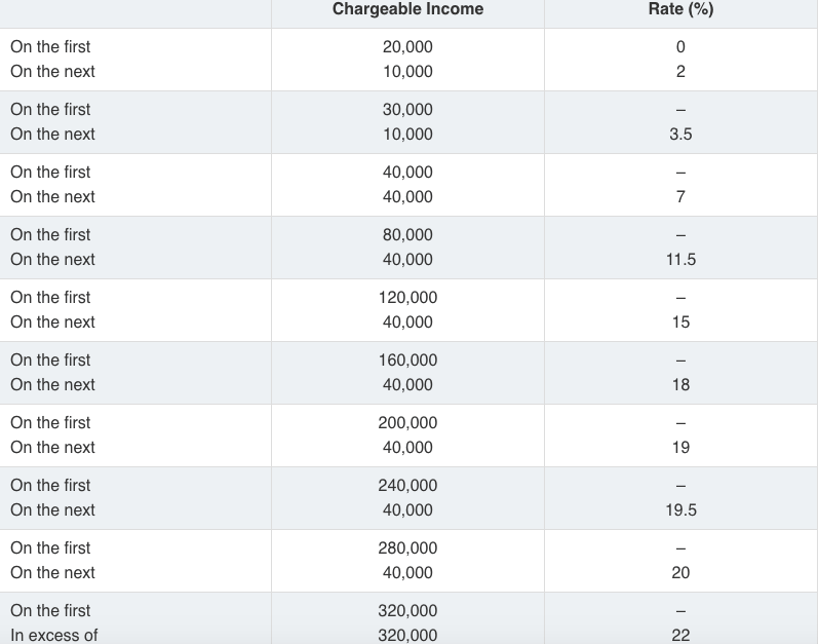
Furthermore, by situating an international or regional headquarters in Singapore, a company can take advantage of the 76 DTA statutes in order to lessen tax burdens; and therefore, barriers to entry (5 Reasons to Start a Business in Singapore). For example, if a company is granted regional headquarters status, or RHQ, they will be granted a tax rate of 15%. On the other hand, if a company is granted international headquarters status, or IHQ, they will enjoy a tax rate between 0% and 10%. Singapore employs a marginal personal income tax system which encourages growth and caps at 22%, nearly 13% lower than the cap in the United States. Additionally, Singapore-based holding companies or headquarters can repatriate their dividends from foreign held subsidiaries back to Singapore free of tax (Why Singapore is Preferred by Foreign Companies).
Singapore adopts a territorial basis for tax collection; meaning, if the dividends are received from a nation with at least a 15% tax rate, Singapore will not double-tax the income and only collect the difference.
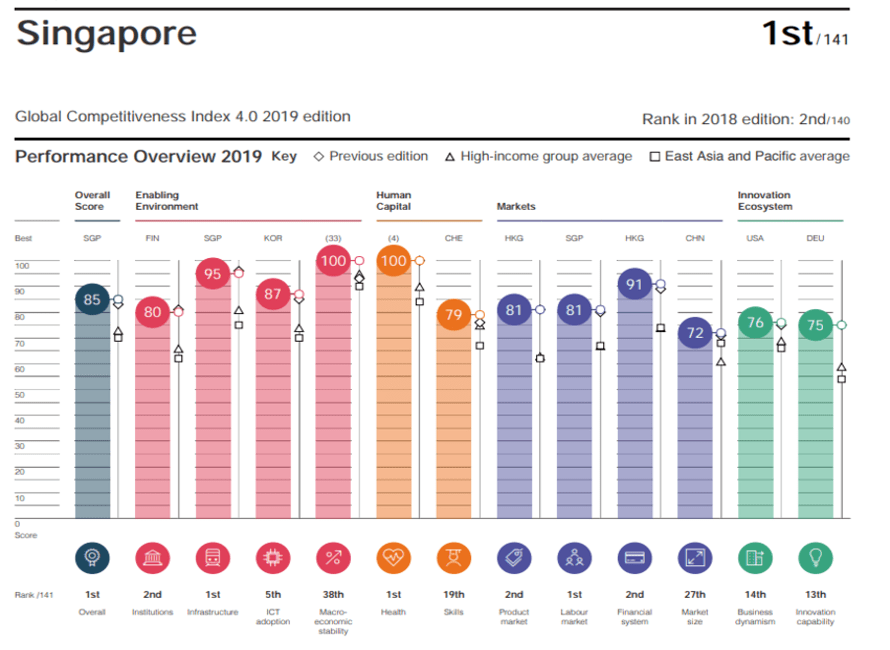
Singapore operates as a vibrant financial center which makes access to capital seamless and available. According to the World Economic Forum, Singapore ranked 2nd in “financial systems” among the 141 countries analyzed.
The country hosts over 128 commercial banks, 31 merchant banks and 604 capital markets service license holders aka brokerages (5 reasons to start a business in Singapore). Also, it should be noted that Singapore houses the worlds 3rd largest forex trading center, the Singapore Stock Exchange.
Proximity & Infrastructure:
Singapore itself is a below average market since its population is 5.6 million people; however, it is the proximity and infrastructure that make it so attractive. Did you know that 50% of the worlds consumers can be reached from Singapore via a six-hour flight? In the Global Competiveness Index Singapore ranked first place in terms of infrastructure.
As of February 2019 the Changi International Airport operates with over 100 airlines flying to 400 cities in around 100 countries. It should be noted that a number of the leading logistics firms have a headquarters already in Singapore: namely UPS and FedEx (Why Singapore is Preferred by Foreign Companies). Furthermore, the seaport infrastructure has historically provided Singapore with great wealth and opportunity. Singapore port offers 200 shipping lanes with links to 600 ports in 123 countries (Why Singapore is Preferred by Foreign Companies).
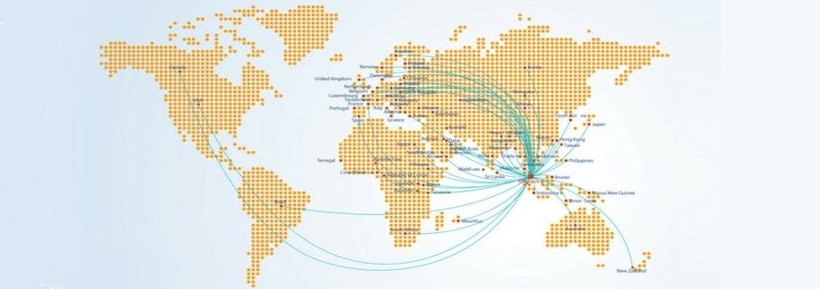
Singapore is located in a strategic location which offers extensive connectivity to the emerging and lucrative Asia-Pacific market. Trade routes and contacts are firmly established to cater to the Chinese and Indian markets, as well as the Bamboo Network. In Singapore, the Chinese make up 70% of the ethnic demographic and control most of the most lucrative businesses. However, they are typically families who have had ties to Singapore for generations and are not involved with the C.C.P. The Bamboo Network is essentially a network of Chinese contacts who control significant industries throughout South East Asia. Therefore, establishing a foothold in Singapore and developing business relationships with Chinese contacts could lead to significant opportunities throughout the region. Creating a presence in Singapore could provide a firm with invaluable contacts and access to developing BRIC markets.
Trade Deals:
Singapore’s economy relies on two sectors: services and industry, namely financial services and electronics, telecommunications, biomedical products, pharmaceuticals, shipping and ship repair (The World Facebook). The main export partners of Singapore are Hong Kong (19%), China (16%), Malaysia (8.9%), the E.U. (8.88%) and Indonesia (5.6%) with other nations making up the remaining 41.6%. The importer profile is similar except the United States and South Korea make up 8% and 6% respectively (WTO: Membership Profile). Singapore is connected regionally and internationally to both strong and developing economies which makes this location even more ideal to do business.
Trade has always been at the heart of Singapore’s economy, so in order to counteract their relatively small market size, Singapore has signed 22 bi-lateral and regional trade deals. According to the W.T.O and Singapore’s Ministry of Trade, the main trade agreements Singapore participates in are the W.T.O, APEC, CPTPP and the IOR-ARC. A free trade agreement (FTA) with China, a FTA with the E.U., and the Comprehensive and Progressive Trans-Pacific Trade Agreement. At this point in time, the U.S.-China trade war is increasing and many American politicians agree that economic action should be taken against China. Additionally, the ASEAN free trade deals open doors to India, Japan, and many more nations (Capri 2018). This provides another reason that makes Singapore an attractive intermediary for Asian markets.
People Proposition:
Legal system and operations:
China is seen to many as the most lucrative emerging market; however, entering China comes with strings attached. China’s Cyber Security Act passed in 2017 that requires foreign firms to store their data on Chinese servers. This cedes all the data to Chinese bureaucrats and poses a threat to your intellectual property. Singapore on the other hand, protects your property with some of the strongest agreements on earth. The ASEAN-Australia Digital Trade Frameworks Initiative provides “formal legal frameworks and standards for e-commerce, digital money, IP protection and data management. Singapore’s current National Trade Platform already provides a world-class prototype for connected businesses by linking importers, exporters, banks, logistics firms, customs, shipping agents and other stakeholders—all in a transparent, open-sourced environment” (Capri 2018).
Singapore is the most stable and uncorrupt polity in South East Asia which offers businesses and entrepreneurs a stable environment. In order to preserve their status as an attractive place to do business the Singaporean government throws the book at criminals so your property and person is protected. Furthermore, due to the social fabric of multiculturalism, namely British influence, the legal framework that Singapore operates in closely resembles that of the United States and the U.K. making it even easier to establish a business here with your company’s current model in mind.
Human capital and labor:
Singapore is known for quality education, on-going training programs and progressive immigration policies that equip the nation with a powerful workforce. Forbes Magazine, other publications, NGO’s and international government agencies, have reported on the labor and talent pool of Singapore extensively. They all recognize that it is one of the most multinational and tech-savvy workforces on planet earth. For example, the Ministry of Trade & Industry in 2020 has allocated $19 billion to “focus on advanced manufacturing and engineering, the digital economy and services, health and biomedical sciences and urban, sustainable solutions” (Calibri 2018). This translates into well versed and trained potential employees for your relocation to Singapore. Furthermore, Singapore is home to prestigious universities which provides fresh talent. The structure of Singapore’s economy, which has welcomed a multitude of Fortune 100 companies, has and continues to attract experts in many different industries. The Global Competiveness Report also cites Singaporean workers as high ranking in productivity and general attitude due to open communication channels and camaraderie between employee and employer (WTO 2016).
Singapore as a tropical paradise:
Something that speaks to the values of Singapore, is their commitment to maintain their cultural heritage, regulate their environmental impact and preserve their natural scenery. Singapore sits within the Tropic of Cancer region. The Malay Peninsula has lush jungles and some of the most pristine and beautiful beaches in the world. Additionally, the Malay Peninsula and the surrounding areas have played pivotal roles in history from so many different groups of people, the region is enriched with culture. There are Hindu-Buddhist influenced architecture and culture paired with modern architecture.
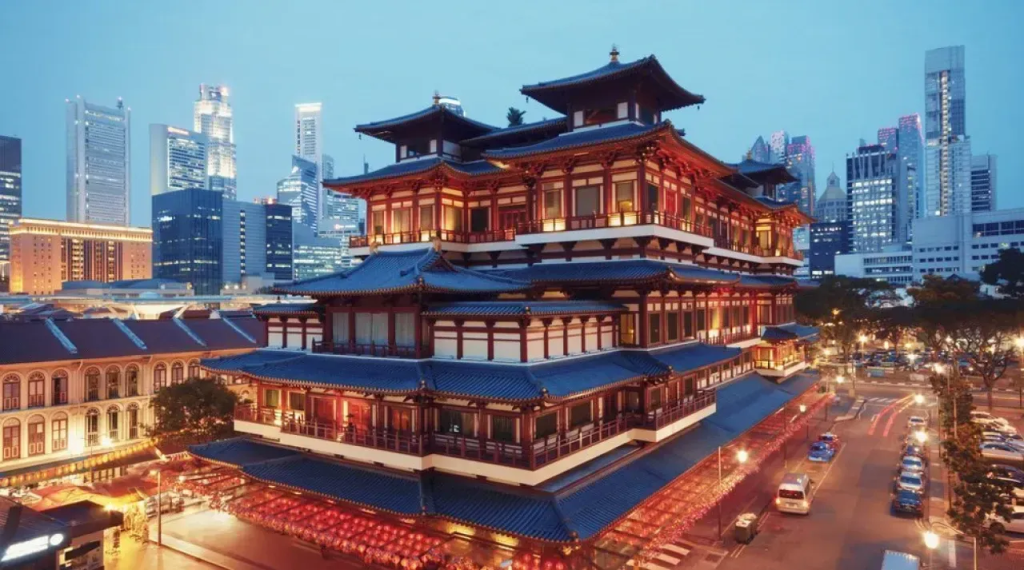
According to Singapore’s Ministry of Tourism, in 2017 the city-state attracted 17.4 million visitors, that is about three times the number of citizens. Singapore has a number of hyper-luxurious hotels and destinations to visit and has been featured in a number of blockbuster films. The restaurant and night-life scene is known to be legendary since so much wealth is concentrated in this relatively small region. The people of Singapore are happy and live in a low crime environment due to aggressive law enforcement.
Profit Proposition:
Based on the aforementioned criteria in building a value proposition outlined in How Strategy Shapes Structure, Singapore is a profitable place to do business. Singapore is unique in that there are enough foreign businesses here to benchmark from and use red ocean strategies, but also enough opportunity in the region to employ blue ocean strategies in developing markets nearby. The economic climate created through tax codes, infrastructure and proximity make it attractive. Combine that with the access to talent and labor, a familiar judicial system with robust protections for your business and a beautiful location with prestigious schools; consequently, your business will thrive here. The Lion’s City has attracted entrepreneurs and adventurers for centuries in the past and based on how Singapore is compared with other nations, will continue to attract adventurers and entrepreneurs in the future. Consult internally with your financiers or externally with one of many consultants in Singapore and you will surely find that Singapore is the profitable and logical choice. Selemat datang ke Singapura, welcome to Singapore!
References:
Capri, A. (2018, September 23). 5 Reasons Why The World’s Tech Firms Are Moving To Singapore. Retrieved October 19, 2020, from https://www.forbes.com/sites/alexcapri/2018/09/21/5-reasons-why-the-worlds-tech-firms-are-moving-to-singapore/
Emma Charlton, S. (n.d.). Singapore crowned world’s most open and competitive economy. Retrieved October 19, 2020, from https://www.weforum.org/agenda/2019/10/competitiveness-economy-best-top-first-singapore-secret-consistency/
Kim W. Chan & Renee Mauborgne (September 2009). How Strategy Shapes Structure. Retrieved October 19, 2020, from Harvard Business Review
Micheal E. Porter & Jan W. Rivkin (March 2012). Choosing the Unites States. Retrieved October 19, 2020, from Harvard Business Review
The World Factbook: Singapore. (2018, February 01). Retrieved October 19, 2020, from https://www.cia.gov/library/publications/resources/the-world-factbook/geos/sn.html
Why choose Singapore for Business: Rikvin. (2020, October 07). Retrieved October 19, 2020, from https://www.rikvin.com/incorporation/why-singapore-is-preferred-by-foreign-companies/
WORLD TRADE ORGANIZATION. (n.d.). Retrieved October 19, 2020, from https://www.wto.org/english/thewto_e/countries_e/singapore_e.htm
Why Choose Singapore for Business: Business Blog. (2020, April 13). Retrieved October 19, 2020, from https://www.singaporecompanyincorporation.sg/blog/5-reasons-to-start-a-business-in-singapore/
 Timeless Teachings
Leave a comment