Written by Aaron Barnes
Factors Contributing to the Crusade
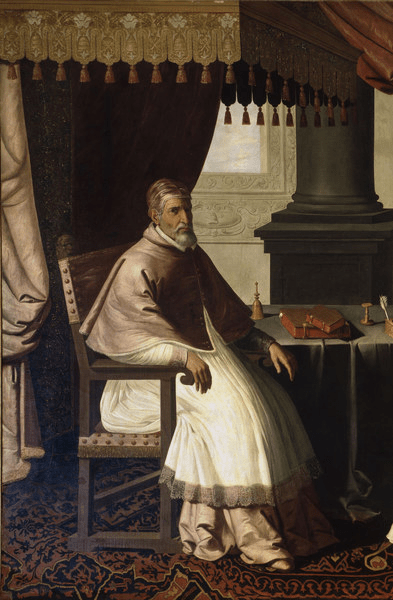
The First Crusade was called into action by Pope Urban II in 1095 with his decree at the Council of Clermont. The decree responded to a second letter written by Byzantine Emperor Michael VII in 1094, the letter called for trained soldiers to come to the aid of Constantinople. Factors that contributed to the First Crusade in the late eleventh century were that:
- The western institutional church and papacy sought influence over political leaders.
- Frankish princes fought each other due to the succession law known as primogeniture. This law grants all titles a noble has to their first born son, leaving nothing (unless specified in their will) to the other sons.
- Norman borders had expanded while mercenary groups had deployed throughout the Mediterranean.
- Seljuk Turks sought to stake their claims to trade and pilgrimage routes in the Middle East.
- Subjects of Frankish kings and Charlemagne were more loyal to their rulers rather than to the papacy.
These factors created tension between the papacy and western leaders which led to an opportunity the Pope would capitalize on.
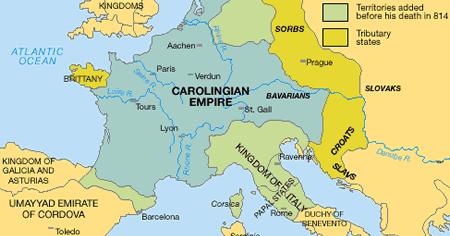
The Feudal laws of fiefdom, enfiefdom and subinfeudation created a noble and knightly class that were loyal to their lords rather than the church. 11th century kings and lords were disunited greatly due to the collapse of central authority and hierarchy. Upon the collapse of the Carolingian Dynasty, Frankish lordships and counties began infighting for control of territory and influence. The Duchy of Normandy was granted by King Charles the Simple (or Straightforward) to Danish viking, Duke Rollo the Walker, in 911 A.D. in order to halt viking incursions and vassalize a powerful warlord to the Frankish kingdom. This act exemplified these conflicts and especially since the conception of Normandy, violence among Europeans was not uncommon. Innocent casualties caught in the conflicts reached a point of such severity that the medieval church needed to decree the Truce of God, which originated in Caen, and the Peace of God, which originated in Cologne in 1083 CE. The order stated that:
…in order that this statute of peace not be violated by anyone rashly or with impunity, a penalty was fixed by the common consent of all; if a free man or noble violates it, i.e., commits homicide or wounds anyone or is at fault in any manner whatsoever, he shall be expelled from our territory [and will default property to his heirs or lord](Allen and Amt 26).
These decrees made it a sin to kill protected groups of people and to make battle on holy months or the month of Lent and provided detailed punishments. These decrees were eventually honored from Frankish lands to German and Italian lands as well.
Traits of Frankish Knights
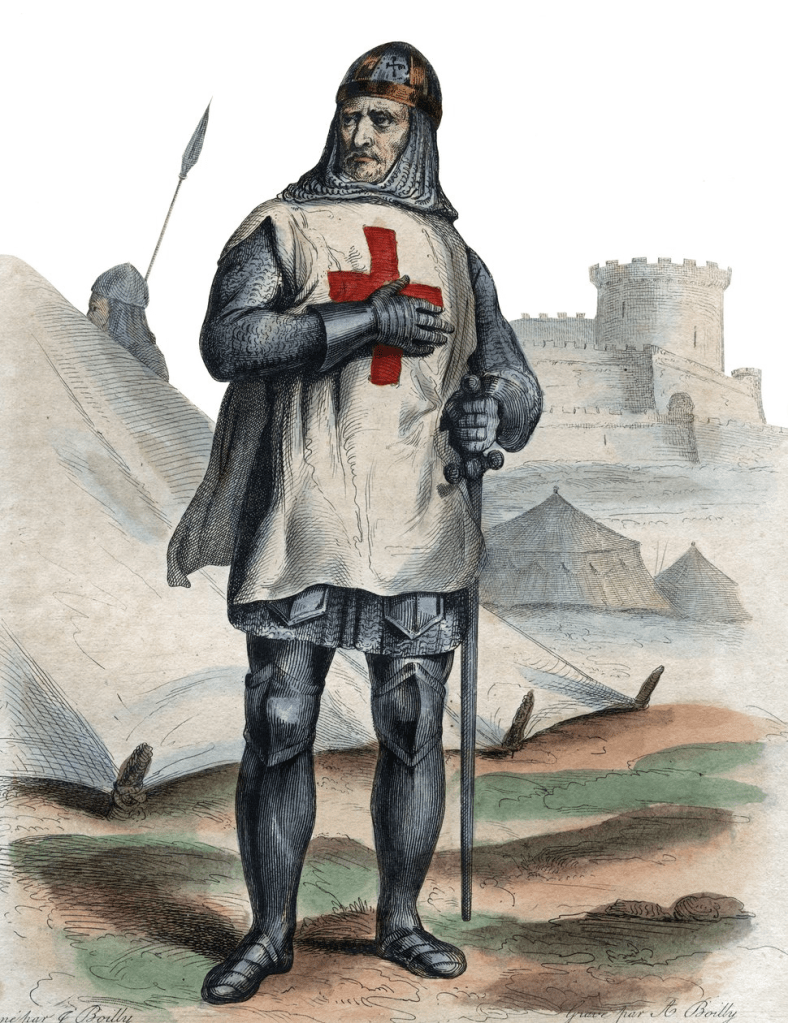
The Franks had a reputation as notorious warriors and fierce Christians due to their conflicts with the Umayyad Caliphate in Al-Andalus. The Frankish knights entertained one another with poetic tales of heroic deeds and combat. One of these tales is about a commander in Charlemagne’s army, the Song of Roland, which exemplifies the ideal Christian Soldier. The Muslim troops say this about Roland,
“Count Roland is of such might he cannot be vanquished by a mortal man!” (Allen and Amt 23)
Before they lobbed dozens of missiles at him. Later in the song, Roland died valiantly at the side of an Archbishop defending relics while the Moors retreated. The song demonstrated the ferocity in which Frankish knights fought, especially against Muslims.
Significance of Manzikert
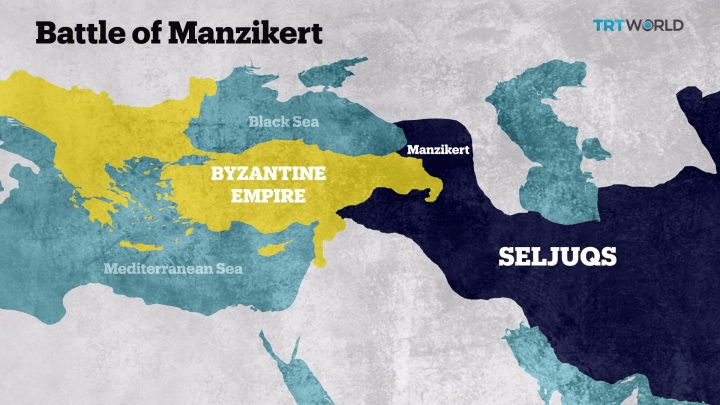
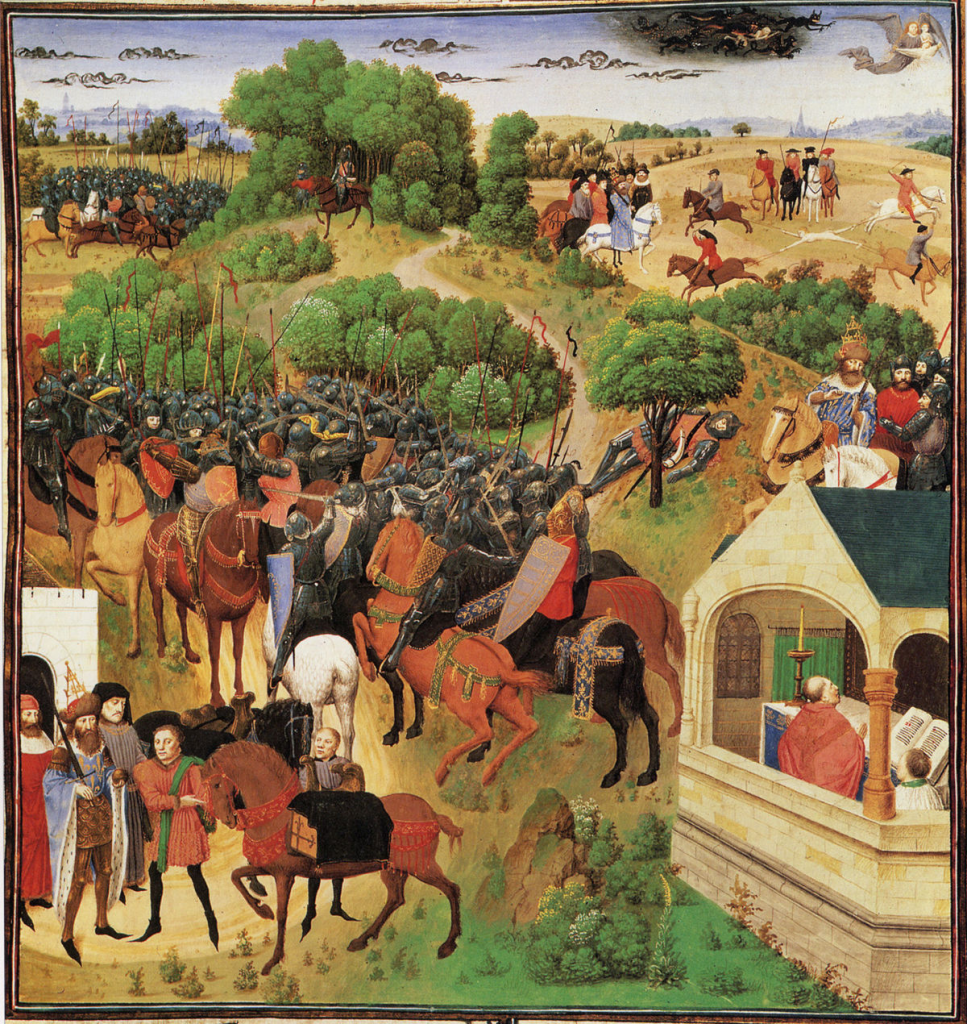
Following the Battle of Manzikert in the East and a letter for defensive aid by Emperor Micheal VII, the Pope gave a Conference at Clermont that united warring Europe against a common enemy, The Seljuk Turks.
The speech given at the Council of Clermont stated:
“Let those who have been accustomed unjustly to wage private warfare against the faithful now go against the infidels and end with victory this war which should have been begun long ago. Let those who for a long time, have been robbers, now become knights. Let those who have been fighting against their brothers and relatives now fight in a proper way against the barbarians.” (Pope Urban II).
The Battle of Manzikert in 1071 and Turkish conquest cemented anti Muslim sentiment in the west. The Seljuk Turks treatment of conquered peoples was described by S.J. Allen in An Introduction to the Crusades:
“At first hostile to Jews and Christians, they became more tolerant of the multicultural nature of the region. Tales of their initial persecutions, however, had already made their way back to Christian Europe. Moreover, pilgrims of this period often found themselves caught between warring Islamic factions.” (Allen 10).
The Seljuk Turks migrated from central Asia into Abbasid and Fatamid territory. Their exceptional soldiering capabilities gave them high ranking status in the Fatamid army. In response to militant Shi’ism, the Seljuk Turks initially took a violent and militant stance of Sunnism, and they discriminated harshly against any other religious sect. The Seljuks took over the Fatamid Caliphate and in 1055, Turkic warlord, Tughril Beg, became Sultan and began to expand north through Palestine and up to Armenia. The Turks conquered territory that threatened the Byzantine Empire and pilgrimage routes to the Holy Land. The reputation the Turks gained through warfare with the Greeks and Armenians provided a reason for them to be perceived as antagonists to Christianity and its pilgrims, even if it was not entirely their fault. After the battle of Manzikert, former Emperor Diogenes was taken prisoner and honored as blood brother to the Sultan, but this angered the emperor’s subjects so much to the point that his own retinue turned on him, and gauged out his eyes, which killed him.
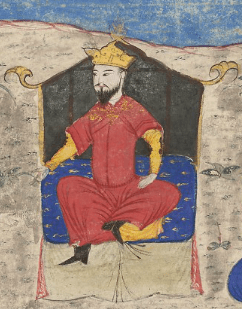
The Sultan was so deeply offended that he nullified the oath of peace between Greeks and Turks and said,
“Henceforth I shall consume with the sword all those people who venerate the cross, and all the lands of the Christians shall be enslaved.” (Allen and Amt 30-31)
The First Crusade
The First Crusade primarily began as a response to the violence on the eastern border by the Byzantine Empire, The Turks and the Turkic treatment of Christian subjects and pilgrims.
The First Crusade officially began with the marching of the Peasants Crusade led by Peter the Hermit. Emperor Michael VII was unimpressed with the initial arrival of disorganized laymen and his infrastructure was inadequate to support them. The Peasant Crusade was short lived though, once they crossed into Seljuk territory in Asia Minor, they were swiftly routed and collapsed. The next wave of crusaders consisted of Pope Urban II’s official forces as well as Norman warriors accompanied by Duke Robert of Normandy, King Stephen of Blois, and Bohemond of Taranta, all great, chivalrous, and esteemed warriors who were members of the Hauteville family who conquered Sicily and waged a successful war against the Byzantines before. Emperor Alexius I was concerned with the Norman arrival because he knew their reputation of colonization. Alexius’ daughter, Anna, describes his reaction in a biography of her father:
“…when he heard the rumors the arrival of the innumerable Frankish armies. He feared the incursions of these people, for he had already experienced the savage fury of their attack, their fickleness of mind, and their readiness to approach anything with violence.” (Allen and Amt 51)
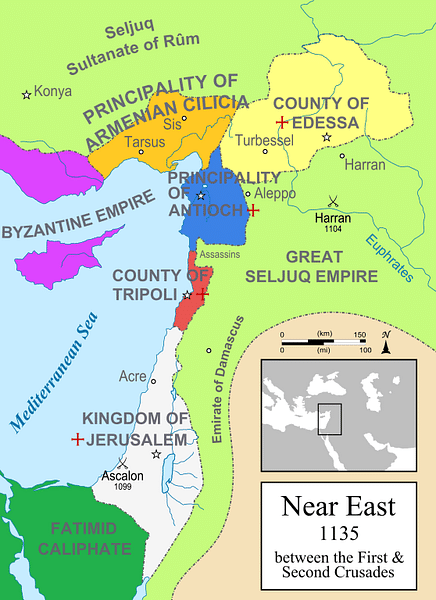
He responded to this by making the Norman leaders swear an oath to him, the oath decreed that Norman conquests and loot must be returned to the Byzantine Empire. The Normans, Frankish armies, and trained crusader armies had tremendous success in the First Crusade and established multiple crusader states including Edessa, and the Latin Kingdom of Jerusalem which lasted for nearly 200 years.
Conclusion
Many variables played a part in the launch of the First Crusade, from the Middle East to Western Europe. The significant role of organized religion managed to push people to the point of fanaticism and into violence. In conclusion, The Frankish and Norman warrior culture, the timing and influence of the medieval church, the Seljuk Turk militant adoption of Sunnism, and the conflicts taking place between the Byzantine Empire and the Seljuk Turks all contributed to the First Crusade. The conflict led to generational polarization and tension in the Old World between these different cultures.
Bibliography
- Allen, S. J. The Crusades: a reader. Toronto, ON: Univ. of Toronto Press, 2014.
- Allen, Samuel J., and Samuel J. Allen. An introduction to the Crusades. Toronto: University of Toronto Press, 2017.
- “Medieval Sourcebook: Urban II: Speech at Council of Clermont, 1095, according to Fulcher of Chartres.” Medieval Sourcebook: Urban II: Speech at Council of Clermont, 1095, according to Fulcherof Chartres. Accessed September 25, 2017. https://sourcebooks.fordham.edu/source/urban2-fulcher.html.
 Timeless Teachings
Leave a comment